
An unexpected museum exhibit
There comes a moment in every man’s life when he discovers that he has become a museum exhibit without having been consulted by the curator.
Mine arrived during a conversation with a customer considerably younger than myself. We had gotten onto the subject of my name, DJ—Dickinson Buell Jr., for the record—and the company was entertaining itself with suggestions as to what they might represent. The usual possibilities were advanced, together with several that would have disappointed my mother.
Eventually, in the spirit of a man contributing a little vintage humor to the conversation, I confessed that I had once maintained they stood for “Diskette Jockey.”
I paused for the laughter.
What I received was the attentive silence generally accorded a foreign visitor who has attempted an idiom and may require medical assistance.
“What,” someone asked, “is a diskette?”
There are questions that age a fellow gradually, and questions that take him straight to the antiques counter, where a small card is placed beside him:
Early data-processing enthusiast. Original teeth uncertain.
I had meant to show my wit. Instead, I had shown my storage.
Or, as I have decided to call it, my store age.
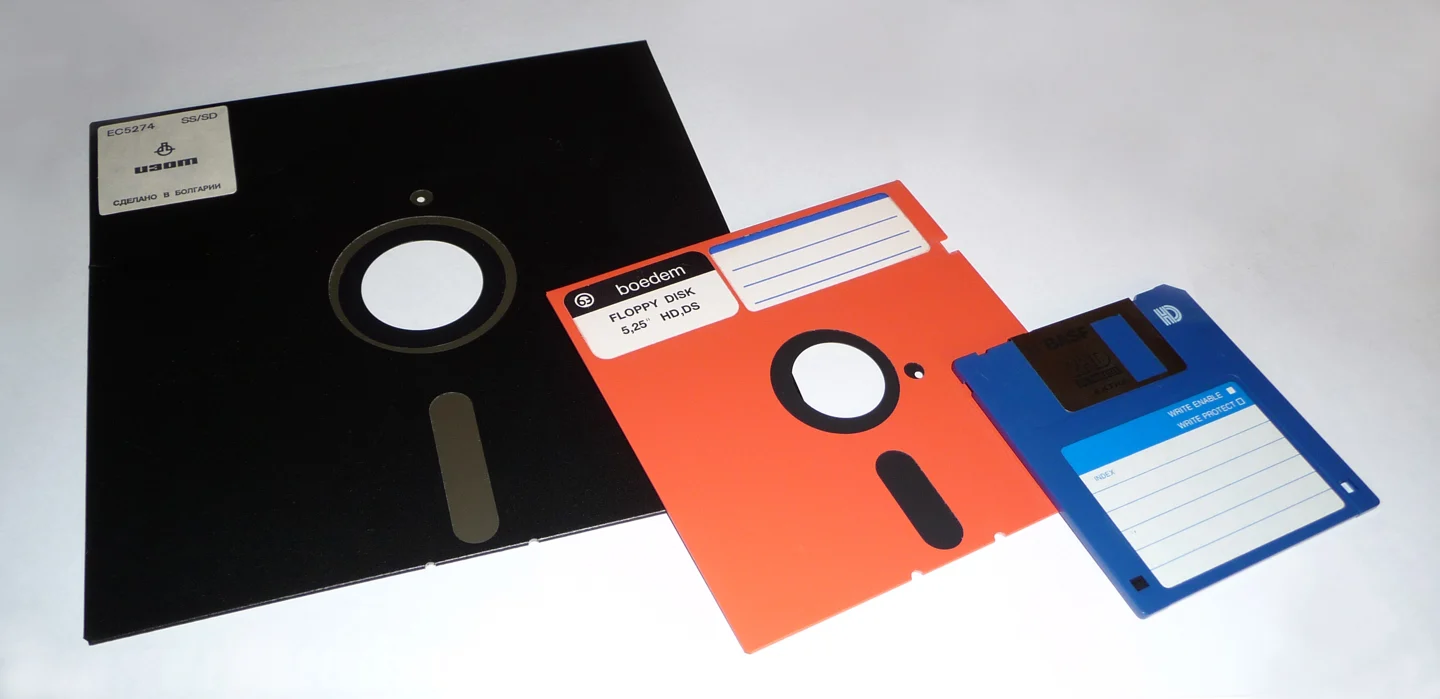
We summoned Google, that tireless research assistant who knows everything and has never had to rewind anything, and began examining photographs of floppy disks: the great eight-inch specimens, the five-and-a-quarter-inch variety, and finally the little three-and-a-half-inch fellows in their rigid plastic jackets.
“Why were they called floppy?” somebody asked.
A fair question. Particularly of the last sort, which were about as floppy as a clipboard.
The recording disk inside was flexible, I explained. The case had simply become more protective over the years, a development I have increasingly come to appreciate myself.
Then VHS tapes entered the discussion. These were known to the company, although music cassettes belonged to a more obscure branch of archaeology.
Why, they wished to know, were videotapes so thick and floppy disks so thin? Was it because a film had more things in it?
We proceeded into the mechanics of drives and read heads, with the growing suspicion on my part that I sounded like a retired mechanic explaining how to hand-crank a Model T.
Bad sectors. Drive A. “Unable to read.”
These phrases, which can still tighten something behind my left eye, meant nothing to them.
They had never fed a disk into a machine and heard the dreadful little grinding noise that suggested it was eating the only copy.
I envied them. There are forms of innocence one ought not to disturb.
Mel and the provisional government
Naturally, having established myself as the oldest object in the room with an active warranty, I went further back.
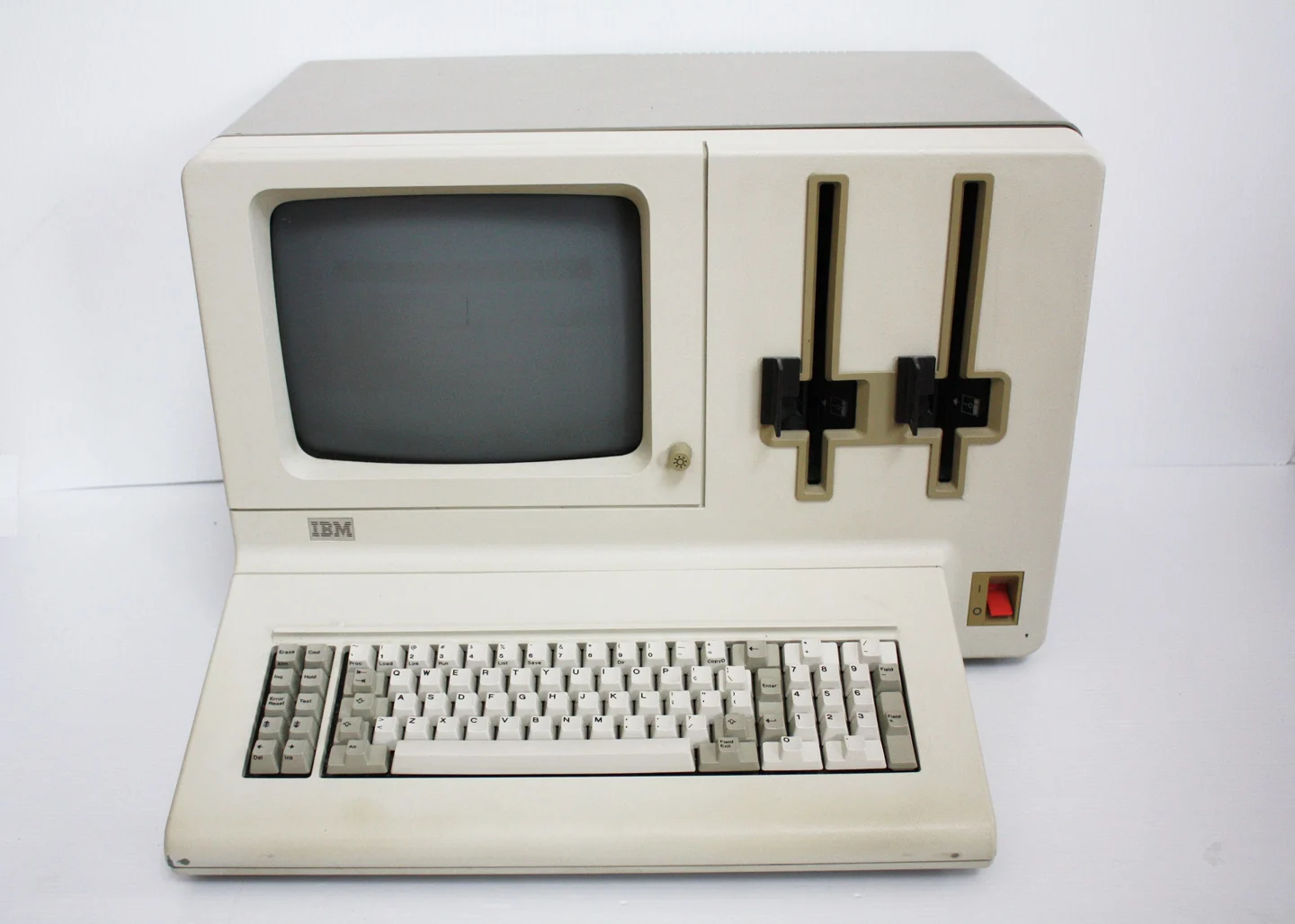
In the early 1980s, my father and I worked on a hotel reservation system using an IBM System/23 Datamaster. We installed it in our house, an arrangement which seems ordinary now but at the time had something of the quality of keeping a locomotive in the breakfast room.
The System/23 had made its debut just weeks before the original IBM PC. Home computers already existed, but this was a business machine, and ours had apparently decided to work remotely before anyone had thought to give the arrangement a name.
It had two eight-inch floppy drives. This was luxury. A man with two floppy drives could look upon a man with one much as a man with a riding mower regards a neighbor holding a rake.

Then the company acquired a hard drive.
The precise capacity has escaped me, which seems a little ungrateful after all the importance I attached to it. At the time, it represented an astonishing amount of storage. Today, my phone would probably consume it while photographing lunch.
An IBM representative named Mel came to install it. As he told us, it was his first installation in a private home, and although the machine was undoubtedly impressive, it was our cats who made the occasion historic.
They adored Mel.
They climbed into his boxes, inspected his hardware, investigated his toolbox, and took an interest in his jacket which suggested they had been commissioned to test its resistance to claws. Wherever Mel wished to put a component, a cat had already established a provisional government.
Fortunately, he was a cat person. A man less favorably disposed might have returned to IBM and recommended that domestic computing be postponed until the nation had dealt with its livestock.
I saw Mel from time to time over the next ten or twenty years. He always remembered the installation.
Not the hard drive. Not the System/23. Not the novelty of carrying commercial computing into somebody’s house.
The cats.
One spends a fortune on the latest technology and is remembered because a tabby slept in the packaging.
The engine room of the future
My father had started his software consulting business in 1978, after years in what was then called data processing—a phrase with a sound of respectable men in short-sleeved shirts doing something important behind a locked door.
He had worked on inventory systems for Kaiser Aluminum, on manufacturing systems, and with people who helped shape the IBM 360 era, including James Martin.


But none of those distinguished associations explains why I entered the profession.
For that, you must picture a boy in 1969, being taken into a computer room by his father.
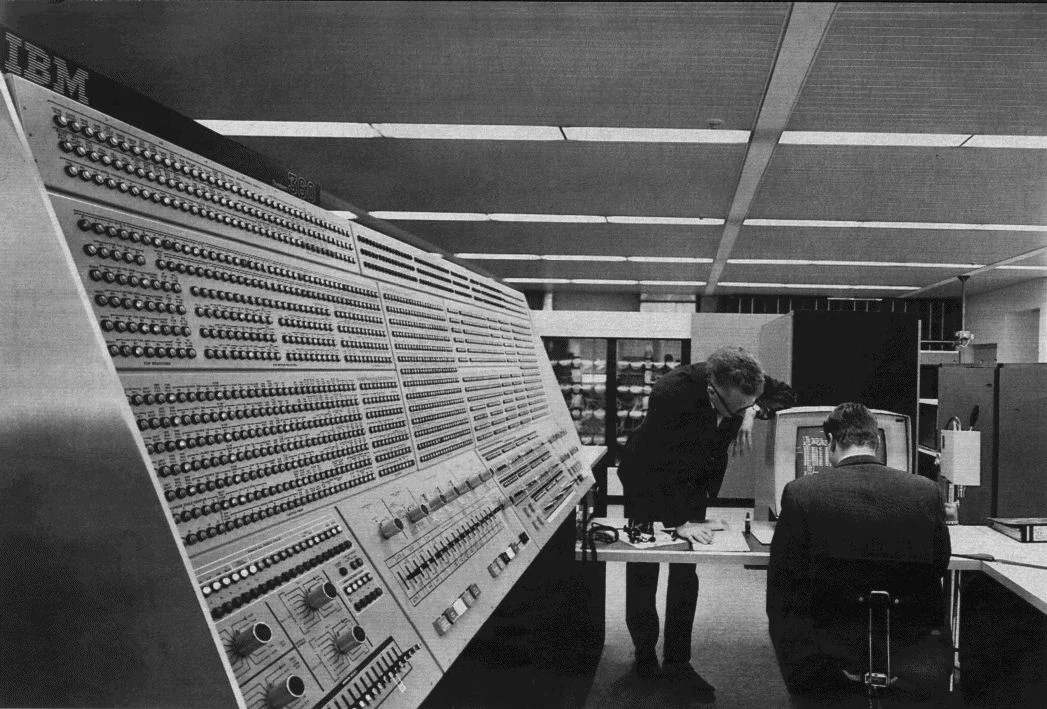
The place was magnificent.
Reel-to-reel tape drives, drum storage, card readers, a keyboard and printer beside the computer, and a great wide green-bar printer which made such a racket that somebody had thoughtfully built it a soundproof enclosure. Without it, I imagine the machine could have printed the quarterly accounts and dispersed a political demonstration simultaneously.
To an adult, it was a data center.
To me, it was the engine room of the future.

My father sat me down at a keypunch machine.
In those days, you could hold a program in your hands. You could also drop it, which gave the whole business a sporting element absent from modern computing.
A substantial program consisted of a stack of cards whose order was of the first importance. Upsetting one was rather like knocking over a library and discovering that every book had been published without a title.
I was permitted to experiment.
This was 1969. Apollo occupied practically every available inch of my mind. I knew the astronauts’ names. I drew the lunar lander, the command module, the spacesuits. Had NASA telephoned to ask whether I could make myself available on Thursday, I should have asked only whether my mother needed to pack lunch.
My rocket
Eventually, I produced a program and carried my cards to an operator.
He ran them.
Then he gave me the output on green-bar paper.
A rocket.
My rocket.
It was made of printed characters, and I doubt it would have passed a severe inspection for aerodynamic soundness. But it had come out of that enormous machine because of something I had told it to do.
I had put an idea into the machine.
The machine had given it back.
And my father was there.
I cannot remember what he said. I wish I could. One would like, later in life, to discover that somebody had been taking minutes at these occasions.
But I remember what it felt like.
He had brought me into his world, pulled up a chair, and allowed me to try.
I have spent a good deal of my life doing what began in that chair.
Progress as an aspiration
Afterward came years of waiting for computers.
Waiting for programs to compile and link. Waiting for files to copy. Waiting while a machine considered a request which, judging by its expression, it regarded as premature.
We did early distributed computing work for Hyatt Hotels involving an IBM Series/1. There were transfers and loading operations long enough to permit a man to make coffee, drink it, reconsider his career, and return to find that progress had become more of an aspiration.
Today, things happen in a blink. Vast quantities of information travel about on little devices that vanish between the sofa cushions. We have made extraordinary advances in storage while remaining entirely at the mercy of upholstery.
“You had to type, Grandpa?”
And now I wonder about my grandchildren.
Will they one day listen to my accounts of computers in 2026 with the tender bewilderment my young customers brought to the floppy disk?
“You had to type, Grandpa?”
Sometimes.
“And wait for an answer?”
Occasionally several seconds. We tried to be brave.
Perhaps they will have quantum computers. Perhaps their houses will be full of intelligent robots, all bustling about making life agreeable. I hope somebody remembers to send the children outdoors. Otherwise, WALL-E may require reclassification under Current Affairs.
When I punched those first cards, the year 2000 lay in a distance so splendidly remote that it scarcely seemed a real appointment. Now it is behind us, and 2030 is coming up the path with its hat on.
I find this difficult to explain, even to myself.
The boy who drew the rocket is still here. He is simply housed in a gentleman who occasionally needs better lighting to read the instructions.
Perhaps that is what I was trying to tell the people in that room.
The disks grew smaller. The machines grew faster. The enormous storage devices yielded to things you can accidentally put through the wash.
But I can still see that sheet of green-bar paper.
I can still feel the astonishment of having made something happen.
And if I could have one afternoon back, I know where I should spend it: in that noisy room, with the cards in my hands and my father beside me, waiting to see whether my rocket would fly.
Though I should also rather like to see Mel.
I expect the cats have a few questions about his toolbox.
Historical notes and photograph credits
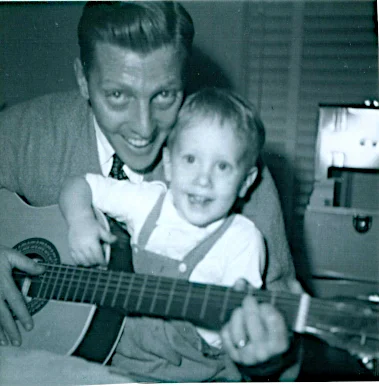
The family, customer, and project memories are the author’s recollections. The equipment photographs illustrate the era; they are not photographs of his family’s installation. The family photograph shows the author and his father in the early 1960s.
- Contemporary System/23 documentation: introduction in July 1981.
- IBM’s PC history: introduction on August 12, 1981.
- IBM’s 5247 Disk Unit service manual: documented capacities of 15.4 and 30.8 MB. The capacity of the drive in this personal recollection is left unspecified.
Photograph credits and links appear with each image. The floppy-disk and System/23 photographs were released into the public domain by their authors. The NASA console photograph is a U.S. government work in the public domain in the United States. Images have been proportionally resized and converted to WebP.
James Martin portrait: Neokoenig, via Wikimedia Commons, CC BY-SA 3.0. The existing Commons crop was resized and converted to WebP; this version is shared under the same license. Family photograph: Buell family collection, supplied by DJ Buell for this story.